Overtaking cyclists
Cyclists are among the most frequent hazards drivers encounter on urban roads, demanding extra care and patience at all times. Under the Highway Code, cyclists are permitted to ride in the middle of the lane, ride two abreast and use the full width of a lane at junctions, so understanding these and the other cyclists rights on the road can be a great start to keeping everyone safe on the roads.
When overtaking, you should leave at least 1.5 metres of space at speeds up to 30mph, allowing more room at higher speeds and only passing when it is safe to do so without rushing. Checking your mirrors frequently, anticipating the movements of cyclists ahead and never cutting back in after passing are all essential habits to develop on urban roads.
Pedestrian crossing
In urban areas, pedestrians are another key hazard drivers need to manage, as collisions are among the most serious on the road. Following the 2022 Highway Code updates, drivers are now required to give way to pedestrians in more situations than many realise, including when turning at a junction and when pedestrians are waiting at a zebra crossing. Find out more about pedestrian rights on the roads.
To stay safe, reduce your speed in areas with high pedestrian activity, never wave pedestrians across the road, stay alert if they step out from between parked cars and always give way at crossings without hesitation. Following these steps and always being aware will help keep the roads safer for all
Road traffic
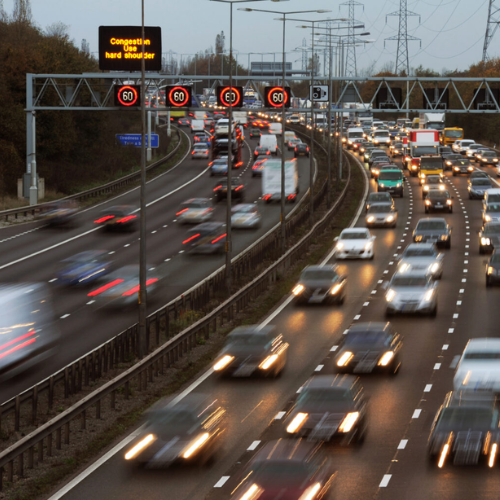
Heavy traffic is an unavoidable part of urban driving and one of the most frustrating environments for newly qualified drivers to navigate. The key to handling it safely is patience and forward planning, keeping safe distances at all times, scanning well ahead for changes in traffic flow and avoiding the temptation to close gaps aggressively.
In slow or stationary traffic, stay alert for cyclists filtering between lanes, pedestrians crossing between vehicles and drivers pulling out without warning. Driving in heavy traffic during busy periods such as rush hour can often cause frustration which can often lead to accidents, so it is important to try to remain calm and drive with care at all times.
Driving in bus lanes
Bus lanes are one of the most misunderstood features of urban roads and a common mistake new drivers make, which can result in fines. Most bus lanes in the UK operate during specific hours, displayed on the sign above or beside the lane and outside of these hours they can be used by all traffic.
Always check the signs carefully when approaching a bus lane, avoid drifting into one when passing parked vehicles and never use a bus lane to overtake during operating hours unless you have to do so to avoid a parked cars. If this is the case it is advised to do so carefully and briefly. It is also important to be wary of buses changing lanes regularly, so watch for indicators, check your mirrors and allow buses to merge lanes when it is safe to do so.
Road works
Roadworks are a frequent feature on urban roads and can significantly change the layout and flow of traffic, making them a particularly challenging hazard. Lane closures, reduced speed limits, workers on the road and temporary traffic lights can all appear with little warning, so staying alert and travelling at safe speeds is essential.
The speed limits displayed in roadworks are legally enforceable and cameras are commonly used to catch drivers who ignore them. Always follow the signage carefully and keep a safe distance from the vehicle in front as stop start traffic is a common cause of accidents in the UK.
Emergency vehicle
Knowing how to respond to an emergency vehicle is another vital skill for any urban driver, as hesitation or wrong moves can be very dangerous. When you see or hear an emergency vehicle approaching with its sirens and lights active, stay calm, check your mirrors and look for a safe place to move out of the way without.
In order to do so safely, you should never mount the pavement, brake suddenly or jump a red light, as doing so could put yourself and others at risk. In heavy traffic, pull over to the left when it is safe to do so, reduce your speed and wait for the vehicle to pass before continuing.
 0330 332 2680
  Book Online
  Login MyRed