
Book Online

Tips for driving in the winter

Winter driving presents some of the most challenging conditions on UK roads. Extreme conditions such as icy surfaces, heavy snow and dense fog all have a significant impact on your ability to drive safely. In the UK, the average number of accidents rises 15% during winter, making preparation essential. From managing your car effectively to navigating high winds, we've put together all the tips you’ll need to stay safe on the road this winter.

Download our app
Highway code for winter driving

The Highway Code sets out clear guidance on how drivers should adapt in winter conditions, so it’s worth familiarising yourself with the key rules before the cold weather sets in.

  1. Your speed should always reflect the road conditions and the national speed limit is not a target. Leave a safe gap between you and the vehicle in front, as stopping distances can increase significantly in wet, icy or snowy conditions.
  2. Before setting off, you are legally required to ensure your windscreen, windows, mirrors, lights and number plate are completely clear and visible for all. Fog lights can help you become more visible to others but should only be used when visibility drops below 100 metres and must be switched off once conditions improve.
  3. Finally, always check road condition reports before travelling and try to avoid unnecessary journeys in severe conditions.

Winter driving conditions

RAIN

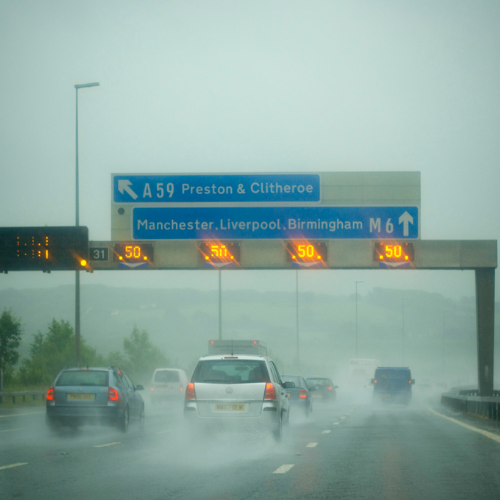
Driving in the rain is one of the most dangerous conditions with 9 out of 10 serious weather related accidents caused in torrential rain. In winter this risk is amplified further with reduced visibility due to darker nights.

Also, the spray from larger vehicles such as lorries can compound this further by temporarily blinding drivers. Finally, standing water is also a threat in winter, as rain drains slower, increasing the risk of aquaplaning where your car loses contact with the road.

Fog

Fog is very common during wintry mornings and can massively impact your visibility, giving you less time to react to potential hazards on the road.

When driving in fog make sure to reduce your speed and increase the gap between you and the vehicle in front. Using your dipped headlights can also help other drivers see you early as well as giving you better visibility. A full beam causes the light to reflect off the water droplets and can actually worsen visibility. If visibility drops below 100m make sure to switch on your rear fog light to make your vehicle more visible to those behind you, not forgetting to turn this off when the fog clears.


SNOW & ICE

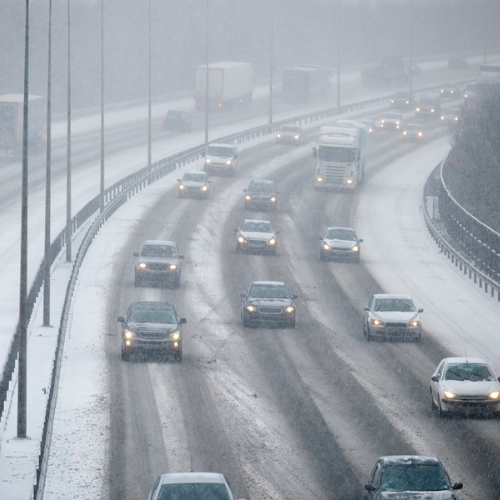
Snow and ice transform familiar roads into some of the most unpredictable driving environments of the year. Icy conditions can catch even the most experienced drivers off guard, particularly black ice, which is almost impossible to see.

Stopping distances increase dramatically on frozen surfaces and combined with reduced visibility from heavy snowfall, the margin for error is significantly smaller than normal.

Wind

High winds can be particularly dangerous on exposed roads, bridges and motorways, where sudden gusts can affect your vehicle’s stability. Making sure you reduce your speed and keep a firm grip on the steering wheel is important. Take care when passing larger vehicles such as lorries as these pose greater risks in blowing over as well as allowing extra room when overtaking cyclists.

DARK

Darker evenings and mornings are unavoidable during the winter months in the UK, and alongside other severe weather conditions they can massively impact your visibility.

To ensure you can drive safely in the dark make sure your headlights are clean and in full working order before setting off and remember to turn them on during any low light conditions. It is important to be extra vigilant for pedestrians or cyclists who may be harder to spot, and if you’re feeling tired – make sure to take a break.

How much stopping distance should I leave?

Driving in wintery conditions can massively increase your stopping distances, so following the guidelines from the Highway Code is very important. Stopping distances on motorways with speeds up to 70mph can take up to 96m in dry conditions, but during winter these numbers can massively increase. In fact, stopping distances in icy conditions can be up to 10x, so ensuring you leave plenty of space when travelling is vital for everyone’s safety.

What to do when your car skids?

If your car skids, the most important thing is to stay calm and avoid making sudden movements as this can often make it worse. To help you, we have provided a few tips to help you come to a safe stop when skidding.

  1. Gradually take your foot off the accelerator to reduce speed.
  2. Try steer gently into the direction of the skid. For example, if the back of your car slides to the left, you should try to steer left.
  3. When possible try not instinctively brake sharply, as this can actually make the skid worse. Newer cars are fitted with ABS which will help prevent your wheels from locking, but if you have an older vehicle without ABS, pumping the brakes gently can help you come to a safe stop.
  4. Once you feel the tyres regain grip, straighten the steering wheel and continue with care.

If you’re wanting to master your winter driving skills, then visit our unique skid pan experience at Donington Park where we teach you how to handle the loss of traction safely on surfaces that simulate icy or wet road conditions.

Winter driving tips for electric cars

Cold weather can have a noticeable impact on electric vehicles (EV) performance, with battery range dropping up to 20% in cold conditions. Charging speeds can also slow down in low temperatures, so factor in extra time if you need to charge on the go.

To protect your range, avoid using too much heating where possible, as this can be a big drain on an EV battery. If your car has a pre-conditioning function, use it to warm the car while still plugged in so you’re not using up  your range before you’ve even set off. Also, if you have a garage, try to use it, as it helps prevent your car from getting too cold.

Winter weather driving fines

Many drivers are unaware that failing to properly prepare your vehicle for winter conditions can result in a fine. It is important to have your vehicle roadworthy, visible and fully cleared as anything less can put both your safety and your licence at risk. These are a few of the fines you could expect when driving in wintery conditions.

  • Driving with a windscreen that is not fully clear of ice or snow can land you a £60 fine and three penalty points for driving without due care and attention.
  • Leaving your engine running unattended to defrost your car (known as idling) could result in a £20 fine, rising to £80 in some areas.
  • Misusing your fog lights when visibility does not require them is also a fineable offence. In more serious cases, where poor vehicle preparation is deemed to have contributed to an accident, drivers can face charges of dangerous driving, which carries significant penalties.

Winter driving safety advice

Preparation before you leave the house is one of the most effective ways to stay safe in winter conditions. Taking a few extra minutes before every journey can make a significant difference, so here are a few key safety tips:

  • Allow extra time – plan your route around major roads where possible, as these are more likely to have been cleared and gritted.
  • De-icer – clear all windows fully, making sure you have clear visibility of the road.
  • Check your fuel – aim to keep at least a 1/4 of a tank in case of unexpected delays or diversions.
  • Check your tyres – make sure your tyres have the right pressures and tread to give you the best grip possible.
  • Make yourself visible – ensure your headlights and fog lights are clean and in full working order before every journey.
  • Bring a safety pack – It is also advised to bring warm clothes, drinks, snacks, jump leads and a shovel in more severe conditions.

FAQs

Are you insured to drive in red weather warning?

Your car insurance covers you to drive in all weather conditions but it is advised to only travel if essential when conditions are severe. Red weather warnings have a direct threat to life so driving can be very dangerous and it is often best to stay at home.

How do you drive in icy conditions?

In icy conditions stopping distances can increase by up to 10 times, so ensuring you leave a safe gap between you and the vehicle in front is essential. Other tips include breaking early, driving in higher gears and evaluating the necessity of travel.


Can I drive in winter with summer tires?

It is not advised to drive with summer tyres during the winter months, especially when temperatures drop below 7 degrees celsius. With summer tyres you will see stopping distances increase due to less traction on the road. This ultimately increases your chances of being involved in a crash, so make sure you have suitable tyres depending on the weather conditions.