Book Online

Tips for wet weather driving

Driving in the rain is something every driver will face, yet it's one of the conditions new drivers feel least prepared for. Wet roads affect everything from how your car handles to how quickly you can stop, so if you underestimate this, it can be one of the most common causes of accidents among newly qualified drivers. On this page we've put together our top tips for driving safely in wet weather, to prepare you before, during and after.

Download our app

How to prepare for wet weather driving

Before you even set off, there are a few simple checks that can make a real difference when driving in wet conditions. Wet roads put much greater demands on your car, so making sure everything is in good working order before you leave gives you the best possible chance of staying safe.

Things to check:

  • Tire tread – Make sure your tread depth is above the legal minimum of 1.6mm as worn tires significantly reduce grip in wet conditions.
  • Windscreen wipers – Check they are clearing the screen properly without smearing, if not, get them replaced.
  • Lights – Ensure both your front and rear lights are fully working so you can see and be seen in poor visibility.
  • Aircon – Check all air conditioning and ventilation is working properly as cars tend to steam up in wet weather.
  • Plan ahead – Check your route before setting off so you can focus fully on the road once you’re driving.

How to drive safely in the rain

Adjusting your driving in wet weather is essential and something new drivers often fail to do. What can seem like light rain can still have a significant impact on your stopping distances and handling. Here are ways you can reduce the risk and help keep the roads as safe as possible.

Reduce speed

Reducing your speed in wet weather is one of the simplest and most effective things you can do to stay safe. The faster you’re travelling, the longer it takes to stop, and with stopping distances already increased by wet roads this combination can be dangerous. Speed limits are there as a maximum, not a target, so even if you’re within the limit it’s always worth asking yourself whether your speed is appropriate for the conditions and can you stop within the distance you can see ahead.

Brake early

When water collects on the road it increases your braking distance as your tires have less grip on the surface. If you need to brake sharply you are much more likely to skid and lose control, which could result in a serious accident. Braking early and gradually rather than sharply will give you the time and distance you need to slow down safely in wet conditions.

Increase following distance

Braking early is only possible if you give yourself enough space, which is why increasing your following distance in wet weather is so important. Stopping distances can double in wet conditions, and if you don’t leave enough room between yourself and the car in front you risk a collision that would be considered your fault.

Use your lights

Using your lights in wet weather isn’t just about helping you see but it’s also about making sure other drivers can see you. When visibility drops, make sure your headlights are on, and if visibility becomes particularly poor (less than 100m) in heavy rain, switch your fog lights on. Just remember to turn them off once conditions improve, as leaving them on can dazzle other drivers and could result in a fine.

Use your windscreen wipers

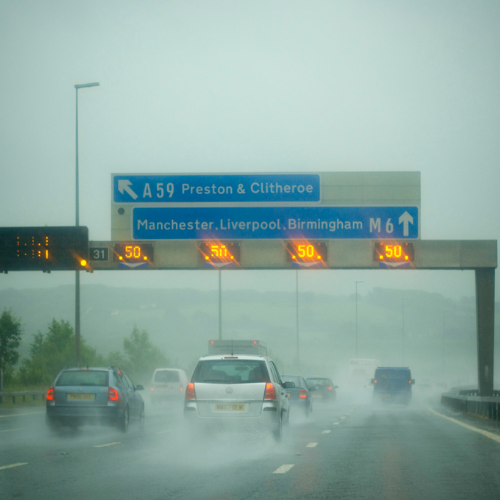
The spray from other vehicles, especially on motorways, can massively impact your visibility, so making sure your windscreen wipers are in good working order is essential. A clear windscreen gives you the best possible view of the road in front and behind you, ensuring you have enough time to react to any hazards. If your wipers are smearing rather than clearing, it’s a sign they need replacing and is something worth sorting before driving throughout the winter.

Avoid standing water

Standing water is very common on roads and can worsen during heavy rain. Driving through it can cause you to lose control of your car, so where possible it is always best to avoid it. If you can’t, make sure to reduce your speed before you reach it and drive through slowly and steadily. Once you’re through, gently applying your brakes can help dry them out and restore their effectiveness as well as checking they are still working.


What is aquaplanning?

Aquaplaning (also known as hydroplaning) is when your tires lose contact with the road due to standing water that hasn’t managed to drain from the surface. This reduces grip and can cause your car to skid and because you lose control of both speed and direction it can be extremely dangerous. In many cases there is very little you can do once it happens.

If you do aquaplane, the most important thing is to stay calm and avoid braking sharply or turning the wheel suddenly, as this can make things worse. Instead, ease off the accelerator gradually and allow your speed to reduce naturally until your tires regain contact with the road.

How to avoid aquaplanning

To avoid aquaplaning, give puddles and standing water a wide berth when it is safe to do so and reduce your speed in wet conditions. The faster you are travelling when you hit standing water, the greater the risk of aquaplaning and the longer any skid is likely to be.

To find out more about how you can best manage skidding in your car, check out our unique skidpan experiences here.

How to drive in floods?

Driving in flood conditions should be approached with extreme caution, and in many cases, the safest decision is not to drive at all. However, if you do find yourself facing a flooded road, there are a few important things to keep in mind to keep yourself and your car safe.

First, assess whether the water is safe to drive through. Even shallow water can cause more damage than many new drivers expect. If you are unsure of the depth or can’t see the road surface, turn around and find an alternative route. If it does look safe to pass through, make sure to:

  • Drive slowly – reducing speed helps prevent flooding your engine.
  • Maintain revs – keeping revs high prevents water from entering the exhaust and stalling the engine.
  • Stay in first gear – lower gears allow you to stay in greater control of your vehicle, reducing the chances of lost traction.
  • Don’t stop – Stationary cars are much more likely to do longer-lasting damage.
  • Check your vehicle after – water can silently damage brakes, electrics, and filters even if the car seems fine.

FAQs

Is it safe to drive an electric car in the rain?

Yes, you can absolutely drive an electric car in the rain as the batteries and electrical systems are completely sealed, so there’s no risk of getting an electric shock or the car short circuiting. EVs are designed to be just as safe and reliable in wet weather as petrol and diesel cars, just drive sensibly as you would in any other car.

What is hydroplaning?

Hydroplanning is another term for when your car skids on standing water found on the roads, also known as aquaplanning. If you can avoid standing water it is best to try to drive round it to reduce the risks of skidding. To learn more about what causes it and how to avoid it, take a look at our aquaplaning section above.


Is it harder to drive in the rain?

Driving in the rain can be very challenging especially when you haven’t experienced it before. The rain creates many more challenges than driving in dry conditions and should be treated with due care. The rain requires much greater concentration and preparation, but the good news is that if you follow all our safety tips and adjust your driving style, you can significantly reduce the risks.