Book Online

How to drive in snow and icy conditions

Driving in snow and ice can feel daunting when you have just passed your test. The roads behave differently, your stopping distances increase dramatically, and the skills you learned in good weather need adjusting.
This guide will help you understand how to drive in snow and icy conditions safely. We cover preparation, technique and what to do if things go wrong.

Download our app

Before you set off on your journey

Good preparation is key and can make a big difference when driving in snow and ice. Here is a checklist of everything you need to do and check before heading off on your journey:

  • Clear your car completely: Remove all snow and ice from windscreen, windows, mirrors, lights and roof. It is important to make sure all snow on the roof of your car is removed as this can move down towards your front window and block your view when you brake. It is illegal to drive with an obstructed windscreen.
  • Check your tyres: You need good grip on the road in winter conditions. The legal minimum is 1.6mm, but 3mm or more is better for snow and icy conditions. You should also check your tyre pressure and make sure your tyres are pumped up to their required amount.
  • Car fluids are topped up: Make sure you check your coolant, fuel levels and oil. Make sure that you are using a screenwash that works at cold temperatures, otherwise it will be frozen and not able to use.
  • Pack a winter kit: Make sure that you are prepared as much as the car is. Pack items such as an ice scraper and de-icer, torch, phone charger, food and drink and blankets. These are then available in an emergency.
  • Plan your route: It is best to plan your route on the main roads as much as possible. The main roads would have been gritted and cleared, unlike country lanes. Make sure you check the traffic and any weather updates before you leave and give yourself extra time.

How to drive in snow

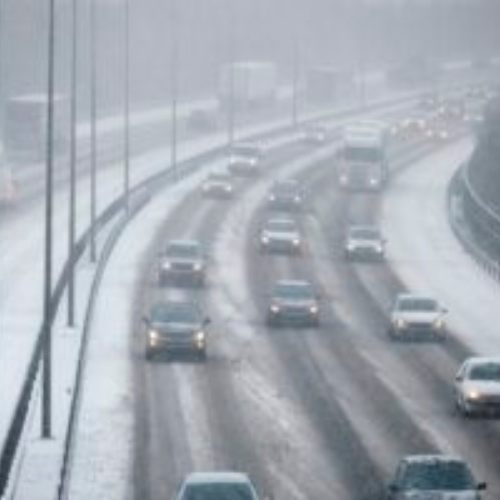
Driving in the snow changes everything about how your car handles. You need to be smooth and gentle with your controls, but most importantly, stay calm and be aware of what to do in certain situations.

Tips to drive in snow

Here are some helpful tips on how to drive in the snow safely:

Pull away in second gear

When you pull away in second gear, this reduces your wheel spin. Some automatic cars have a winter mode that will do this for you.

Keep your revs low

Try to keep your revs low when driving and change up to a higher gear as soon as you can. This helps your tyres grip rather than spin.

Leave a bigger stopping distance

Your stopping distance in snow can be ten times longer than on a dry road. Drop back from the vehicle in front and give yourself plenty of room in case you or the vehicle in front needs to stop and skid in the process.

Brake gently

Sudden braking can lock your wheels and cause a skid. If you need to slow down, ease off the accelerator early and use the brakes lightly. You can also use engine braking, which involves shifting down through the gears to slow down rather than relying on your brakes

Avoid sudden movements

Harsh steering, acceleration or braking can all cause you to lose control. Keep everything smooth and steady, and remember to remain calm.

Watch for changes in conditions

The road surface can vary from one stretch to the next. A sunny section might be clear while a shaded area stays icy. Even if the road looks to be safe, always drive with caution, as some snow may not be visible when driving, such as black ice.

Driving uphill and downhill in snow

When you are driving in the snow, and you come to an incline or decline, there are certain things to be aware of to help you control your vehicle.

When driving uphill in snow, you must stay back from other traffic so you can keep a constant speed and try not to change gears on the hill. Avoid stopping halfway up because you may struggle to get moving again.

When going downhill, the key is to remain slow, especially when you reach the slope. Stay in a low gear and avoid braking if you can. If you need to brake, make sure it is done progressively.

Driving in heavy snow

If you are driving and the snow is coming down heavily, then the first thing to consider is whether it’s safe to continue. If not, then drive to a safe area without causing any obstruction to other vehicles and make sure you and your passengers are safe.

If you can drive safely, you must switch on your dipped headlights to make sure that the rear of the car is visible to other drivers. If visibility drops below 100 metres, you must use your fog lights. Make sure you keep a safe stopping distance between you and the vehicle in front, and take your time – there’s no rush!

How to drive on the ice

Ice is often harder to drive in than snow, as it’s harder to see on the roads. Black ice is a thin layer of transparent ice that forms on the road surface and is almost impossible to see. Here are some warning signs:

  • The temperature is near or below freezing.
  • Road surfaces look wet, but you cannot hear tyre noise.
  • Frost is visible on verges and hedges.
  • You are driving on a bridge, overpass or shaded stretch of road.

The highway code UK also highlights the main dos and don’t for driving in snow and icy conditions.

Visit Highway Code UK

How to drive in icy conditions

The key to driving on the ice is to be prepared and to remain calm. Everything takes longer on ice, so slow down and take your time – reduce your speed and give yourself time to react if needed. Be gentle with your controls and make sure you steer, accelerate and brake smoothly.

Conditions can change quickly, so expect the unexpected. Just because a road is gritted does not mean that the full road surface has been treated.

What to do if you skid on ice

The most important thing is to stay calm and do not brake hard. When you’re driving in icy conditions, and you start to skid, remove your food off the accelerator and steer gently in the direction you want to go. If the rear of the car slides to the right, then you steer to the right.

The aim is to allow your car to slow down naturally without you making any sudden movements. Once the car is stationary and safe, the tyres will regain grip and you can adjust your position and continue.

How much can stopping distance increase in icy conditions

On a dry road at 30mph, your stopping distance is about 23 metres. On ice, that can increase to 230 metres or more. This is ten times the normal distance. Keep this in mind when judging gaps and approaching junctions. You need far more space than usual.

Summary: Driving in snow and ice

Driving in the snow and ice can seem daunting, but like any weather condition, you just need to be prepared and calm. Make sure you plan and know what to do in all circumstances. Find out more about The Highway Code – driving in adverse weather conditions on the GOV website.

RED Driver Training supports newly qualified drivers to feel more confident after passing their driving test. Download our app and learn more about how to expand on your driving knowledge and become an experienced driver.

Download our app

FAQs

Is it illegal to drive with snow on your car?

You must clear snow and ice from all your windows, mirrors and lights before driving. Driving with an obstructed windscreen is illegal. Snow left on your roof can slide down and block your view or fall onto other vehicles, which could be treated as dangerous driving.

Should I use winter tyres in the UK?

Winter tyres are not a legal requirement in the UK. However, they provide better grip in cold and icy conditions. If you regularly drive in areas that see a lot of winter weather, they can make your journeys safer and easier.

What should I do if my car gets stuck in snow?

Do not spin your wheels. Clear snow from around your tyres and exhaust. Place something like a car mat or grit under the wheels for traction. Pull away gently in second gear. If you cannot move, call for assistance and stay in your car to keep warm.