Mirror Signal Manoeuvre during the driving test
During your driving test, examiners pay close attention to your use of the MSM driving routine. It demonstrates that you are observant, considerate, and able to plan ahead. A missed mirror check only becomes a serious fault if it affects another road user or shows a consistent lack of observation. Repeated errors may even lead to a serious fault, meaning a test failure.
Key things to remember for your driving test
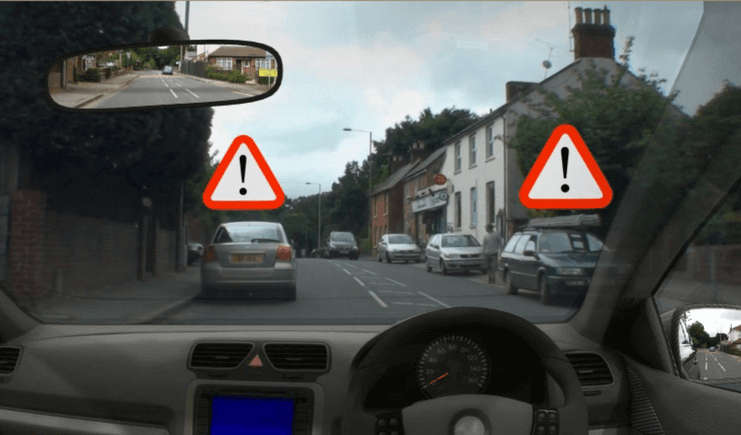
Examiners are making sure you are always using the MSM routine when necessary, and they look out for the following:
- Check mirrors in good time before signalling or changing position
- Use signals clearly and correctly
- Make manoeuvres only when it’s safe to do so
Consistent use of the mirror signal manoeuvre proves that you are in control and aware of your surroundings.
Common mistakes learners make with the Mirror Signal Manoeuvre routine
Even though MSM is simple, many learners struggle to apply it consistently. Here are the mistakes examiners commonly notice:
- Checking mirrors too late: Learners sometimes check mirrors at the same moment they signal or even after. Mirror checks should always come before signalling, so you can judge whether it’s safe.
- Only checking one mirror: Relying solely on the rear-view mirror can be dangerous. You need to check all relevant mirrors, including side mirrors, depending on the manoeuvre you’re about to make.
- Forgetting blind spots: Blind spot checks are essential when moving off, changing lanes, or overtaking to make sure you are completely safe to start the next move.
- Signalling without purpose: Some learners signal too early, too late, or when it isn’t appropriate, which can confuse other road users. Signals must be timely and meaningful.
- Hesitating after signalling: Signalling but then waiting too long before acting may give mixed messages. If you signal, you should normally follow through when it’s safe.
- Not adjusting speed appropriately: MSM isn’t only about mirrors and signals; it’s also about preparing for the manoeuvre. Learners sometimes forget to slow down or position correctly before turning or changing lanes.
 0330 332 2680
  Book Online
  Login MyRed