LIMITED TIME OFFER: Save 37% on RED Driving Instructor training.

Book Online

Guide for driving on country roads

With large parts of the UK being countryside, lots of road networks include country and rural roads. If you’re outside a big city and find yourself driving in the countryside, it’s important that you know the different road signs and hazards so you can drive safely.

Download our app

Pass your test with RED

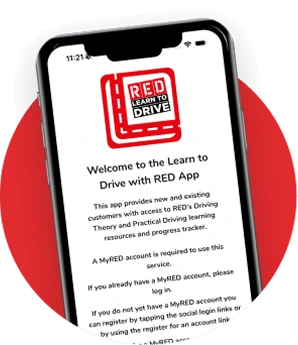
Keep your driving skills sharp with the Learn To Drive with RED app. Download the app, get a free 30-day trial plus access to practice theory test content

What is a country road?

Country or rural roads are roads away from towns or cities that connect villages, farms, and rural communities in the countryside. They carry less traffic than urban roads, so they’re typically narrower, more winding, and have fewer road markings than city roads. Often, country roads won’t be wide enough for two directions of traffic to pass comfortably.

There are also a lot fewer streetlights, so the limited visibility, combined with other unique hazards, can make driving on country roads challenging. So you must know what to expect and how to accommodate your driving before going on country roads.

Speed limit on country roads

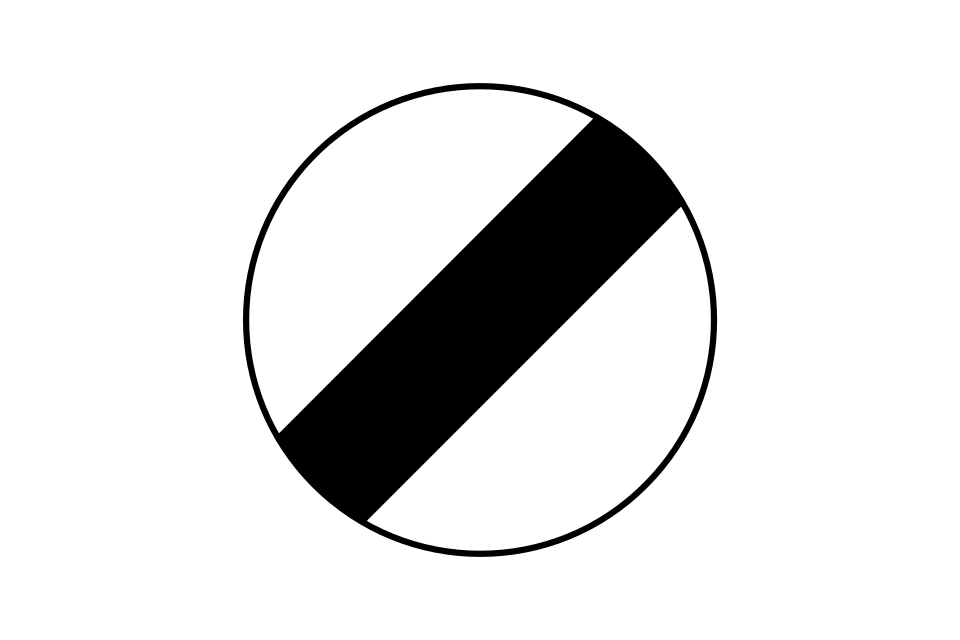
The speed limit on UK country roads depends on the type of road and the signs you see. On single-carriageway roads with the national speed limit, the maximum speed for cars and motorcycles is 60 mph. You’ll spot the national speed limit sign as a white circle with a single black diagonal stripe.

If you see any other speed limit signs, those local limits take priority, so always keep an eye out for changes.

And remember, 60 mph is a limit, not a target. Many country roads are narrow, twisting and can hide sharp bends or hazards. Always choose a speed that allows you to stay fully in control and react safely to what’s ahead.

Country road signs

The signs you find on country roads might be different from the ones you see in cities. That’s because there are different hazards to watch out for. You should make sure you familiarise yourself with the following signs in the Highway Code so you know what they mean:

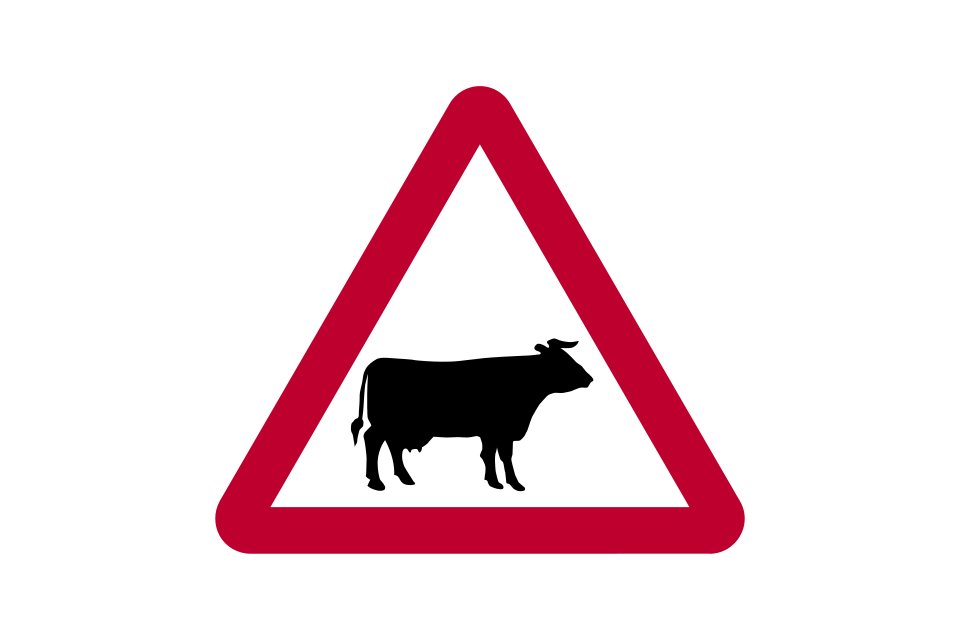
  • Animal signs: signs with animals like horses, cattle, and wild animals might appear on country roads. When you see these, make sure you’re driving at a speed where you feel comfortable that you can react and stop safely to animals crossing the road.
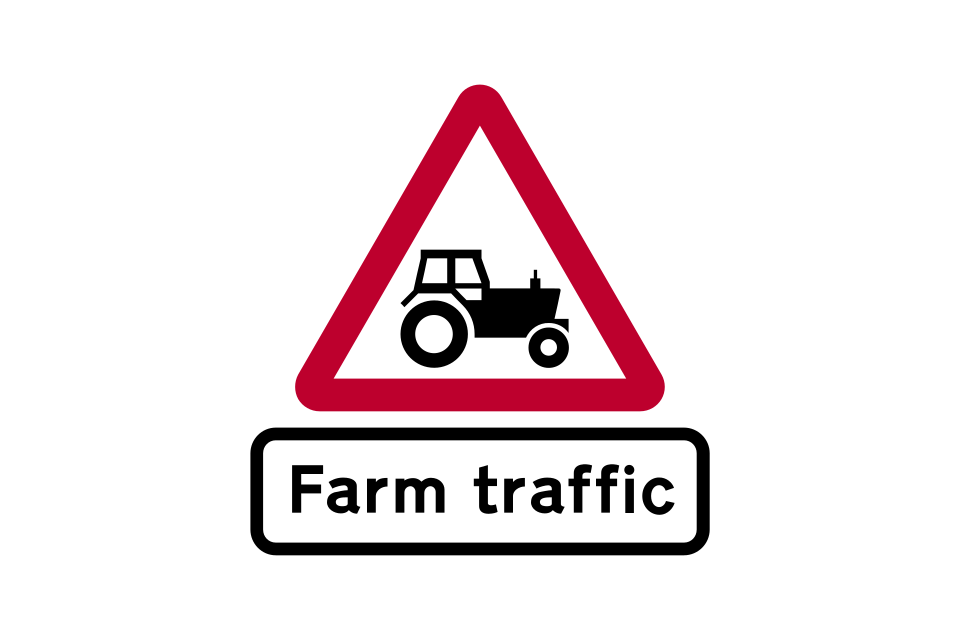
  • Farm vehicles ahead: larger farm vehicles like tractors may use the country roads. When you see these signs, be prepared for slower-moving traffic.
    Low bridge: You’ll see these around the UK, but on rural roads, you might come across more low bridge signs. They also show the maximum height allowed, so you should always check the number shown as clearance varies. If you’re driving in a tall vehicle that exceeds the clearance height, make sure to take an alternative route.
  • Low bridge: You’ll see these around the UK, but on rural roads, you might come across more low bridge signs. They also show the maximum height allowed, so you should always check the number shown as clearance varies. If you’re driving in a tall vehicle that exceeds the clearance height, make sure to take an alternative route.

Tips for driving on a country road

With less visibility, typically narrower lanes, and faster-moving cars than in the city, driving on a country road can be daunting. Below are some key tips to help you stay safe and confident while navigating rural roads.

Overtaking

Country roads often have sharp bends, hidden dips, and limited visibility, making overtaking risky. Sometimes there won’t be enough space to overtake other vehicles, so you should only attempt to do so if it is safe. If there is space, always ensure you have a clear view ahead and never attempt to overtake on or near a bend, hill, or junction.

Bends

Bends, and often blind bends where you can’t see what’s around the corner, are pretty common on roads in the countryside. When approaching bends, slow down and keep to your side of the road, as oncoming vehicles may appear suddenly or be positioned closer to the middle of the road. Use your headlights if visibility is poor, and avoid harsh braking while turning.

Right of way

Because rural roads are often narrow, there may not always be enough space for two vehicles to pass comfortably. This means you need to make extra considerations when figuring out who has the right of way.
If oncoming traffic is approaching quickly and the road is narrow, you should look for wider spots and somewhere to pull in safely to let them through. If you’re already in a spot where you can wait, you should let the other driver pass first. If there’s a spot behind you, use your rear mirrors to check if it’s safe to reverse.

Be patient and use hand signals or a polite wave to communicate with other drivers so you both understand who’s doing what and avoid confusion.

Watching out for livestock & different vehicles

Driving through the countryside between farms and small villages, you’ll find different types of vehicles and animals on the road than what you’ll find in the city. Here are a few ways you should navigate the different road companions you might encounter:

Pedestrians

There aren’t usually pavements on country roads, so you might see people walking next to cars. Pedestrians should walk on the opposite side of the road for visibility, but this isn’t always the case. You should be on the lookout for them and not go too fast around bends – just in case they aren’t taking the right precautions.

Cyclists

As with pedestrians, there aren’t usually cycle routes on country roads. As always, give cyclists 1.5 metres space and overtake them slowly. You should also be extra mindful when behind them on steep hills, where they may be struggling and moving a bit less predictably.

Tractors

Tractors move very slowly, so you may find yourself stuck behind one – especially as they’re a bit harder to overtake depending on how big they are and the width of the road. But they don’t usually travel far on the road between farms, so it shouldn’t be for too long. If there is room to overtake, make sure you’re doing it safely, away from a bend to avoid head-on collisions.

Livestock and horses

You’ll likely see a sign that there are cattle/wildlife in the area, so you should be extra alert when driving through these roads. If it’s safe to do so, you can overtake livestock and horses, but you should try to give them 2 metres where you can, drive slowly, and don’t use your horn – otherwise you might spook them.

Headlights and driving on country roads at night

Driving on a country road at night can be particularly daunting due to the lack of street lighting and limited visibility. You’ll need to adjust how you use your headlights compared to city driving to ensure you can see the road clearly and remain visible to other drivers.

When driving on unlit rural roads, use your full beam headlights to illuminate as much of the road ahead as possible. This will help you spot hazards early, such as sharp bends, animals, or obstacles.

However, it’s important to dip your headlights as soon as you see an oncoming vehicle or when you’re following another car closely. Otherwise, you might distract other drivers and cause an accident. Once the vehicle has passed, you can safely switch back to full beam. It’s also a good idea to practice switching between full and dipped beams smoothly, so you can do it instinctively without fumbling for the controls.

FAQs

Can I have a driving test on country roads?

Yes, you could have your driving test on a country road. But it depends on the time of year and whether your test centre has access to them. If it’s icy or there could be fog, it’s unlikely that even if your test centre has access to it that you’ll drive on it as part of the test, as it could be dangerous. 

Is it harder to drive in the English countryside?

Yes, it can be harder to drive on country roads than on city roads. That’s because there are fewer road markings, the roads are typically narrower and winding, and you’ll be travelling at a faster speed (up to 60 mph). You should make sure you practice driving on country roads and that you’re comfortable with the different signs and adjustments you’ll need to make before driving on them. 

What should I watch out for when driving on country roads?

There are a few different things you should watch out for when driving on rural roads, including: livestock and horses, large vehicles like tractors, pedestrians and cyclists in the road, sharp bends, and potholes or uneven roads. Some of these may be signposted with warning signs, but you should be extra vigilant on country roads, adjusting your speed to overtake big vehicles or animals as well as when turning round blind bends.

You may also be interested in…

Learn To Drive With RED app

Find out more

The cornerstone of learning to drive efficiently is being able to monitor and track your progress to test success, and our new app, Learn To Drive With RED, puts learning to drive in the palm of your hand.

Find out more

Pass your driving theory test

Read more

Everything you need to know about the Driving Theory Test and the best ways to practise and pass. Start studying today and pass with confidence!

Read more
hazard-perception-test

Hazard Perception Test

Learn more

The Hazard Perception Test is crucial to the overall driving theory test, as it is designed to test a candidate's ability to spot and respond to potential hazards while driving. Find out more and start practising today!

Learn more
Download the Learn to Drive with RED app
4.5800 ratings 4.5 out of 5 from 800 ratings