LIMITED TIME OFFER: Save 37% on RED Driving Instructor training.

Book Online

A guide to driving in the rain

The UK gets a lot of wet weather, so it’s important you know how to navigate roads in these more dangerous conditions. Learn everything you need to know about driving in the rain, from how to know your car is prepared to understanding stopping distances.

Download our app

Pass your test with RED

Keep your driving skills sharp with the Learn To Drive with RED app. Download the app, get a free 30-day trial plus access to practice theory test content

Why driving in the rain can be dangerous

Wet weather can make roads much more dangerous, especially for new drivers and those who don’t have much driving experience in wet weather. Rain doesn’t just make things wet, it changes how you need to handle your car and how well you can see. If you need to drive in the rain, here are a few reasons why you should take extra care:

Reduced visibility

Heavy rain can make it much harder to see the road ahead, road signs, lane markings, and other vehicles. It can also cause glare from the headlights of oncoming traffic, making it even more difficult to see clearly – especially at night.

Slippery roads

When it rains, water mixes with the oil and dirt on the road. This makes it easy for your tyres to lose some grip, especially when it comes to braking and turning.

Hydroplaning (or aquaplaning)

This is when your tyres start to ride on top of the water instead of the road. This can cause a loss of control of the car and skidding.

Distractions inside the car

Rainy weather often means dealing with loud windscreen wipers, fogged-up windows, or constantly adjusting your air settings. These small distractions can take your attention away from driving if you’re not careful.

Being prepared and knowing the risks can make a big difference when staying safe on the road. Throughout this guide, you’ll find tips on how to minimise these hazards, but the most important thing is to stay calm and focused, and give yourself extra time to travel.


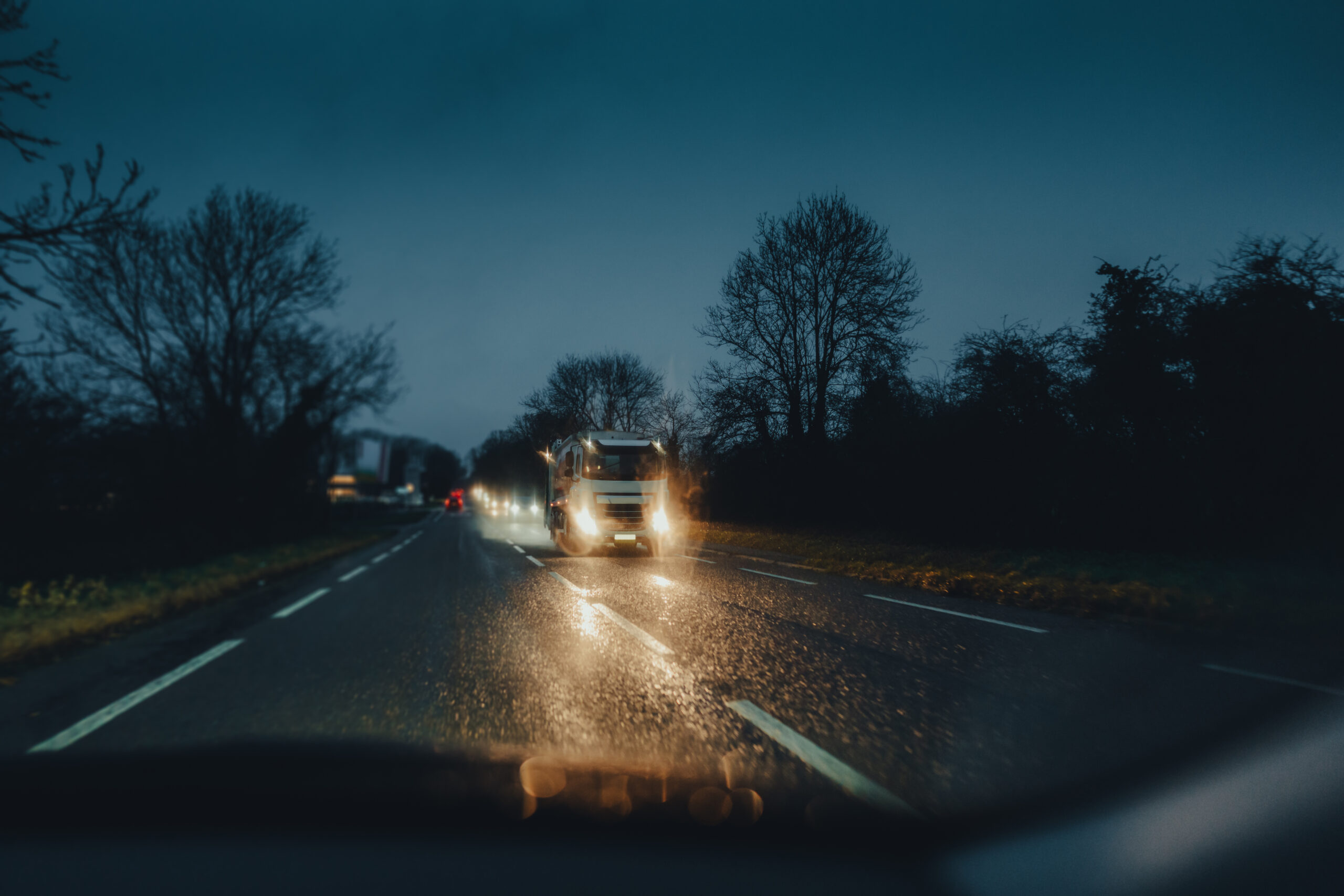
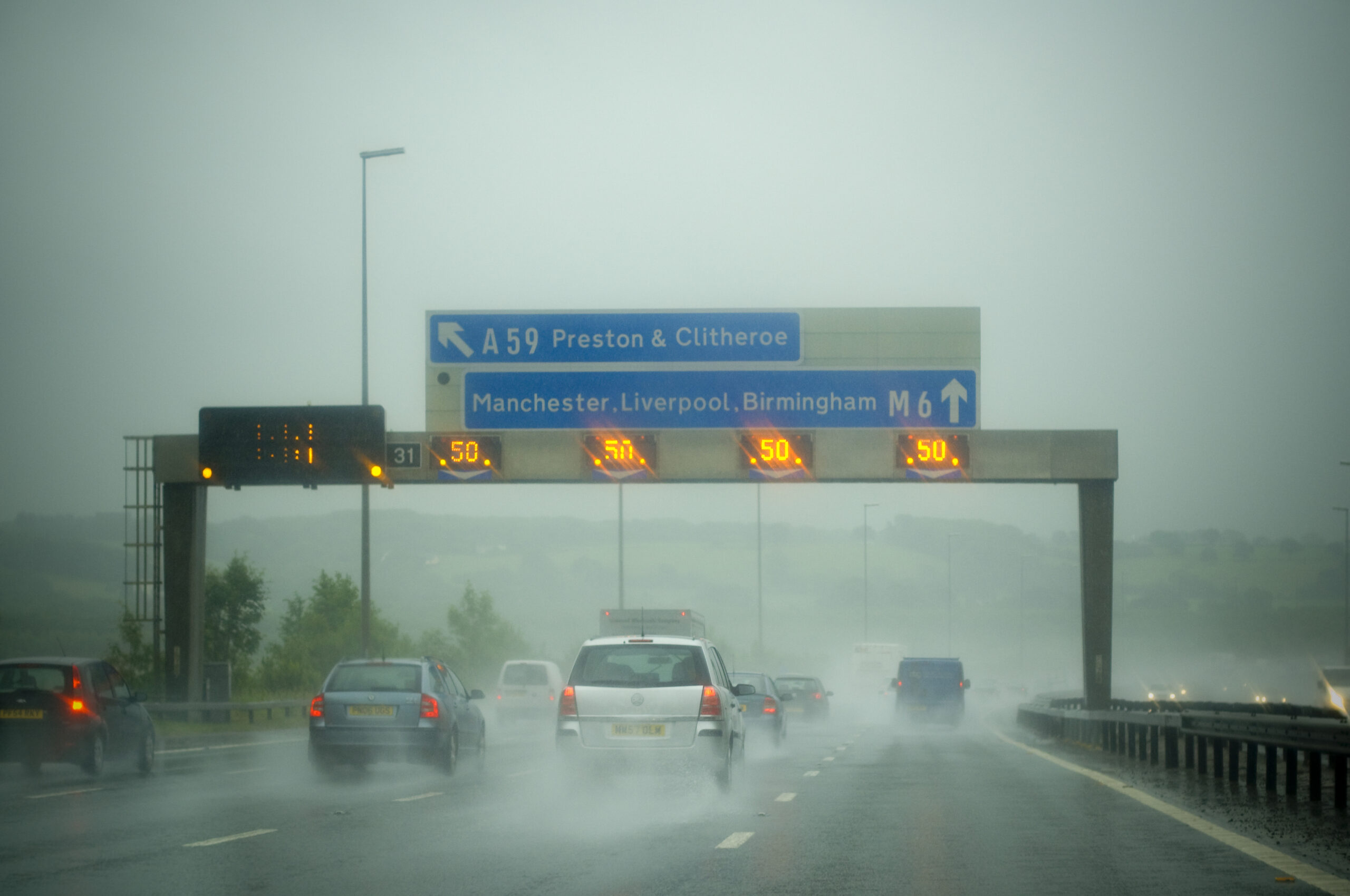
Lorry driving on a rainy day in United Kingdom

How to prepare for driving in the rain: before you set off

Taking a few minutes to prepare before heading out in wet weather can make a big difference to your safety. You should always check the conditions before heading out, especially on a longer journey, along with these key things:

Check your tyre tread depth

Make sure your tyres have at least the legal minimum tread depth (1.6mm according to the DVSA Highway Code). But for a better grip in wet weather, ideally aim for around 3mm. Deeper treads help channel water away from your tyres to maintain grip and reduce the risk of skidding.

How to check tyre tread depth

Checking for tyre tread depth is very quick and doesn’t require fancy equipment. Grab a 20p coin and put it into the tyre’s tread grooves. If you can see the outer band of the 20p coin, the tread is below the legal minimum and the tyre must be replaced. Lots of tyres also have built-in wear bars (small raised sections across the grooves) – if the tread is worn down to the level of the bars, you’ll need to replace the tyre.

Check your windscreen wipers

To make sure you’re getting enough visibility when you’re driving in the rain, your windscreen wipers shouldn’t be worn out or streaking. If they leave marks or skip across the glass, they need to be replaced. You should also top up the washer fluid in your car to keep the windscreen clean if it gets smeared or muddy during wet weather.

Check your lights

For more help with visibility, you must make sure all your headlights, tail lights, brake lights, and indicators are working as they should – this is essential so you can see other cars, and they can see you. You should do this any time you’re about to drive, but it’s especially important when it’s raining, when there might not be as good visibility.

Check your demisters and air settings

When it’s cold or wet outside, your windows can fog up quickly, making it hard to see. You should know how to quickly clear foggy windows using your front and rear demisters, and practise how to use them before you actually need to.

Plan ahead

Check weather and traffic reports to get a clear picture of what your journey could look like. You should give yourself lots of extra time to travel so you don’t feel rushed, as you may also find yourself in traffic jams and slower moving traffic.


Tips while driving in the rain

Once you’re out on the road and the rain’s coming down, how you handle your car matters and is different from drier conditions. Wet roads can make even short trips more risky, so here are some practical tips to help you stay safe and in control of your vehicle.

Stopping distance in the rain

Slippery roads mean that your car will take longer to stop, so your stopping distance – the distance from when you brake to when you come to a full stop – will be longer than usual. Your tyres also don’t grip as well in the wet, and sudden braking can more likely lead to skidding.

The Highway Code recommends doubling your normal following distance when it’s raining. Usually, you can use the 2-second rule to see if you’re too close to a car in front. But when it’s raining, make it 4. This gives you more time to react if the car in front of you brakes or swerves, to avoid hitting the vehicle in front or losing control.

You should also brake earlier and more gently than usual, especially before turns or roundabouts. This will help you to avoid losing grip.

Stopping distances in the rain: theory test

Stopping distances in the rain can also come up in your theory test. So if you’re revising for your theory, remember, your stopping distance can be at least twice as long. So, for example, at 60mph:

  • Dry stopping distance: around 73 metres
  • Wet stopping distance: over 145 metres

You don’t need to remember the exact numbers, but you do need to know that stopping distances at least double in wet conditions.

If you need help learning your theory, download the Learn to Drive with RED app for theory test revision and practical driving tips.

Use your windscreen wipers

Your windscreen wipers will be useful in wet weather for helping with visibility. You should set the wiper speed depending on how heavy the rain is – lots of cars have multiple settings, or an automatic sensor that adjusts it for you.

Remember, part of your practical driving test also involves showing you know how to use your car’s “ancillary controls” (secondary features like windscreen wipers and heating). You need to show how to operate these while driving without losing control of the car – you can even get a fault for not turning on the wipers when it starts to rain.

Avoid puddles and floods

Driving through water might seem fun or harmless, but even shallow puddles can hide potholes and deep water, causing you to lose grip or damage your car.

You should avoid puddles and standing water where possible. But how do you drive through (mild) flood water or puddles if you have to? Slow right down and stick to the middle of the road where the water is likely more shallow. After going through water, lightly press your brakes a few times to help dry them off.

Avoid driving through water if you can’t see how deep it is. Even shallow water can cause a loss of control, and deeper water can lead to engine damage

FAQs

Is it harder to drive in the rain?

Yes, driving in the rain is definitely harder, especially if you’re still building confidence behind the wheel. Wet roads reduce tyre grip, which makes it easier to skid and harder to stop quickly. Visibility can also take a hit due to rain on the windscreen, glare from headlights, or fogged-up windows.

The key is to slow down, keep a bigger gap between you and the car in front, and stay focused. The more you practise in different conditions, the more confident you’ll become.

Can I have a driving test in the rain?

Yes, you can take your driving test in the rain. As long as the weather conditions are safe enough to drive, the test will go ahead. 

Just remember to adjust your driving, using your wipers and demisters properly, slowing down and allowing for doubled stopping distances, and staying calm. Examiners know it’s harder to drive in the rain, but you’ll be tested on how safe and controlled you are in these tougher conditions. And, you’ll be susceptible to more potential faults if you don’t adjust your car and handling properly.

If the weather gets really bad, like heavy flooding or dangerous wind, the test centre might cancel and reschedule your test for safety reasons – but that’s pretty rare.


Can I drive an electric car in the rain?

Yes, you can absolutely drive an electric car in the rain: its batteries and electrical systems are completely sealed, so there’s no risk of getting an electric shock or the car short-circuiting. EVs are designed to be just as safe and reliable in wet weather as petrol and diesel cars, just drive sensibly as you would in any other car.

You may also be interested in…

Learn To Drive With RED app

Find out more

The cornerstone of learning to drive efficiently is being able to monitor and track your progress to test success, and our new app, Learn To Drive With RED, puts learning to drive in the palm of your hand.

Find out more

Driving in the dark

Read more

Reduced visibility, glare from headlights, and fatigue can make even familiar roads feel challenging when driving late. We’ll explore how to prepare your car, adjust your driving, and stay alert to keep yourself and others safe in the dark.

Read more

Driving in the fog

Learn more

In this guide, we'll walk you through everything you need to know about driving in fog. You'll learn what fog actually is, why it's so challenging, everything about fog lights, and how to drive safely in fog.

Learn more
Download the Learn to Drive with RED app
4.5800 ratings 4.5 out of 5 from 800 ratings