Tips for driving in the dark
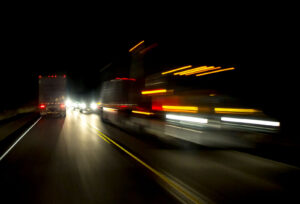
Once you’re on the road, your driving style should adjust to the conditions. Visibility is limited, and other drivers may not see you as clearly.
Use the right lights
Use dipped headlights from sunset to sunrise, or whenever visibility is reduced. This ensures you’re visible without blinding other drivers. You should avoid using full beams in built-up areas or when there are other vehicles nearby, as this can cause dazzling.
If you’re on an unlit country road and need to use full beam, switch back to dipped lights as soon as you see another vehicle’s headlights or rear lights.
You should also make sure your lights are clean and correctly aligned: poorly aimed headlights can limit how much of the road you can see and may dazzle others even when dipped.
Keep your distance
Because of the reduced visibility, it’s harder to judge distances at night. Increase your following distance from the usual two-second rule to at least three or four seconds, especially on faster roads. This gives you more time to react if something unexpected happens.
Watch for pedestrians and cyclists
Reduce your speed when approaching junctions, crossings, or poorly lit streets. Scan the edges of the road as well as straight ahead, and look out for movement or reflective surfaces.
If you’re driving through a village or near a school zone, be particularly cautious. Slowing down gives you extra reaction time in case someone steps out unexpectedly.
Avoid looking directly at oncoming headlights
You should always avoid directly looking at the headlights of other cars, as this can cause dazzling and temporary impairment of vision. Instead, look to the left-hand edge of your lane, and use white line markings (if they’re there) as a guide until your vision adjusts.
You should also make sure to keep your windscreen clean and avoid smudges, as this can make glare worse.
Manage fatigue
Driving while tired is dangerous to yourself and other people on the road. If you start to feel drowsy, pull over safely and take a short break. Avoid long night drives after a full day of work, and consider sharing the drive if possible.
Reduce your speed
At night, you can only see as far as your headlights allow. So your speed should reflect how much of the road you can actually see. This is known as “driving within your headlights’ range.” Reduce your speed on dark, winding, or unfamiliar roads, and approach bends or junctions cautiously. Avoid sudden braking or sharp steering movements, as these can cause skidding, especially if the road is wet or icy.
Practise driving in the dark as a learner driver
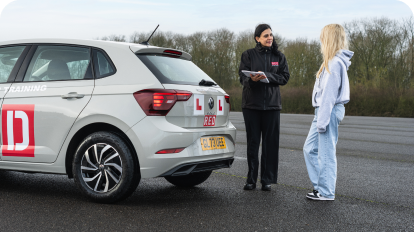
Driving at night can feel daunting for learners, but the best way to build confidence is with supervised practice. If you’ve already started driving lessons, ask your instructor about booking an evening lesson. This lets you get used to the different lighting conditions, how to handle glare, and experience how your car feels at night, all in a safe, controlled environment. If you’re practising with a qualified supervisor instead, make sure they check their insurance covers this, as some providers may restrict learner supervision after a certain time.
You’ll also become more confident managing features like dipped beams, fog lights, and demisters, which are all part of your practical driving test skills. The more varied your experience, the better prepared you’ll be for driving independently, day or night.
 0330 332 2680
  Book Online
  Login MyRed