LIMITED TIME OFFER: Save 37% on RED Driving Instructor training.

Book Online

Clutch control: how to use a car clutch

The key to driving a manual car is mastering clutch control. Whether you’re a new learner or simply brushing up on your technique, understanding what a car clutch does and how to use a car clutch correctly will make your driving smoother, safer, and far more enjoyable.

Download our app

Pass your test with RED

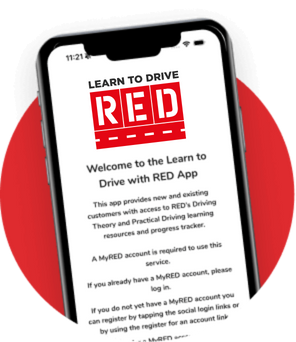
Keep your driving skills sharp with the Learn To Drive with RED app. Download the app, get a free 30-day trial plus access to practice theory test content

What does a car clutch do?

Before going into detail on how to use the clutch, it’s important to understand what it actually does.
The clutch is a mechanical device that connects and disconnects the engine from the gearbox. When your foot is off the clutch pedal (left-hand pedal), the engine and gearbox are connected, and power flows from the engine to the wheels. When you press the clutch pedal down, this connection is temporarily broken, allowing you to change gears without grinding or stalling.

Clutch in automatic cars

Automatic cars don’t have a clutch pedal, but they do have a clutch system. The clutch’s role is performed by components within the torque converter or a set of automated clutches, depending on the type of gearbox.
Because the clutch system in an automatic car operates automatically, the driver doesn’t need to worry about clutch control or finding the biting point. This makes automatic cars easier to drive, especially in heavy traffic or hilly areas.

How to use the clutch

Learning how to use the clutch in the car takes practice, and each car’s biting point can differ. Here are some step-by-step instructions on how you can practice:

  1. Press the clutch fully down before starting the engine. This is required in many modern cars and is good practice for safety. This ensures the engine and gearbox are disconnected.
  2. Change into the correct gear. For example, first gear when moving off, or reverse when backing up.
  3. Find the biting point – Slowly raise the clutch pedal until you feel the car slightly lift or hear a change in engine tone. This is where the clutch plates begin to engage, and what is called the ‘biting point’.
  4. Gently release the clutch while lightly pressing the accelerator (right-hand pedal). The goal is to keep the car moving forward smoothly without stalling.
  5. After the car is rolling forward or backwards, depending on what gear you are in, you can gradually lift your foot completely off the clutch. Keeping your foot on the pedal unnecessarily can wear it out prematurely.

How to use a car clutch in different situations

Knowing how to use a car clutch correctly is about more than just pulling away. Different driving conditions require different levels of clutch control. The following scenarios explain how to manage the clutch pedal smoothly in real driving situations.

Moving from a stationary position

When you’re moving from a stationary position, it is important to keep your clutch control smooth to avoid any jerking movements or stalling. Avoid rushing the clutch release, and when you feel the biting point, that is when you can add some acceleration and release the handbrake.

Changing gears while driving

When you’re increasing or reducing speed, you need to change gears. It is important to do this smoothly and steadily without ‘riding’ the clutch (keep your foot on the pedal for too long). This can cause wear on the clutch and reduce performance over time.

Hill starts

Hill starts are where clutch control is important and test your skills as a driver. You must control the car from rolling backwards when releasing the handbrake to move off. It is key to get the biting point perfect, check mirrors and signal if needed, and then release the handbrake only once the car reaches the biting point and begins to pull forward.

Slow driving or crawling in traffic

In slow-moving traffic, you often move forward just a few metres at a time. Good clutch control allows you to crawl without excessive braking or stalling. Avoid holding the clutch at the biting point for long periods, as this can cause unnecessary clutch wear. If you expect a longer stop, press the clutch fully down and apply the brake or handbrake.

Reversing

Reversing requires light pedal work and awareness of your surroundings. Control your speed using the clutch only, as you usually don’t need to press the accelerator unless on a hill. If you need to slow down, gently press the clutch back down or apply light braking.

Parking and manoeuvring

When parking in tight spaces, good clutch control helps you adjust and make accurate movements. Using the clutch can help control your speed, which is key when parking, as it is more about precision than speed. You usually won’t need the accelerator when manoeuvring on flat ground, but a little may be required on slopes.

FAQs

What does a car clutch do?

The car clutch connects and disconnects the engine from the gearbox. When you press the clutch pedal, it separates the engine’s power from the wheels so that you can change gears, start, or stop without stalling. When you release it, power flows back through to the wheels, allowing the car to move.

How do I find the biting point?

To find the biting point, press the clutch fully down, select first gear, and then slowly raise the pedal until you feel the car lift slightly or hear a change in engine tone. This is the point where the clutch plates begin to engage. Once you find it, you can apply the accelerator slowly to move off.

Why does my car stall when I lift the clutch?

Stalling happens when the clutch is released too quickly or without enough acceleration. The engine doesn’t get enough power to move the car forward, so it cuts out. The key is to balance the clutch and accelerator gently to prevent stalling.

Do automatic cars have a clutch?

Yes, although automatic cars don’t have a clutch pedal, they still have a clutch system. This means that the driver is not required to manually use the clutch to change gears or move off. The car’s clutch system does it automatically, which is why people say that driving an automatic is easier.

Should I press the clutch when braking?

You should only press the clutch when your speed drops very low or when you’re about to stop completely. Pressing it too early disengages engine braking and reduces control. 

How do I know if my clutch is wearing out?

Common signs of clutch wear include: a burning smell after driving, difficulty changing gears, and a high biting point. If you notice these symptoms, it’s best to have your clutch checked by a qualified mechanic.

You may also be interested in…

Learn To Drive With RED app

Find out more

The cornerstone of learning to drive efficiently is being able to monitor and track your progress to test success, and our new app, Learn To Drive With RED, puts learning to drive in the palm of your hand.

Find out more

Pass your driving theory test

Read more

Everything you need to know about the Driving Theory Test and the best ways to practise and pass. Start studying today and pass with confidence!

Read more
hazard-perception-test

Hazard Perception Test

Learn more

The Hazard Perception Test is crucial to the overall driving theory test, as it is designed to test a candidate's ability to spot and respond to potential hazards while driving. Find out more and start practising today!

Learn more
Download the Learn to Drive with RED app
4.5800 ratings 4.5 out of 5 from 800 ratings