
LIMITED TIME OFFER: Save 37% on RED Driving Instructor training.

Book Online

Mirror Signal Manoeuvre

Learning to drive safely and confidently starts with understanding the Mirror Signal Manoeuvre (MSM). This simple driving routine is applied in almost every action you take on the road. But what exactly does MSM in driving mean, when should you use it, and why is it so important, especially during your driving test?

Download our app

Pass your test with RED

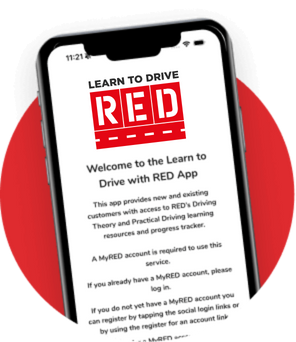
Keep your driving skills sharp with the Learn To Drive with RED app. Download the app, get a free 30-day trial plus access to practice theory test content

What is the Mirror Signal Manoeuvre routine?

The mirror signal manoeuvre, or MSM driving routine, is a simple routine that helps drivers stay safe and in control while driving. Here is each stage and what it means:

  • Mirror: Check your mirrors to assess the position and speed of traffic around you. Check all mirrors and blind spots.
  • Signal: Once you’ve confirmed it’s safe, signal clearly and within a good time. Your main method of signalling is your indicators. Brake lights also communicate information, but are not a substitute for indicating.
  • Manoeuvre: After checking your mirrors and signalling, make the manoeuvre, whether that’s changing lanes, turning, overtaking, or pulling over.

This process helps ensure that every action you take behind the wheel is planned and safe.

MSM in driving

MSM in driving is more than just following a checklist; it teaches you to think ahead and stay aware of your surroundings before taking action. When applying the mirror signal manoeuvre routine, you need to monitor the traffic situation, communicate with other road users and reduce any risk of an accident happening by sudden or unindicated driving manoeuvres.

When to use the Mirror Signal Manoeuvre

The mirror signal manoeuvre routine should be used before any change in speed or direction. Some examples may include:

  • Turning at junctions: Check mirrors, signal, then slow down and turn.
  • Changing lanes: Always check mirrors and blind spots, signal, and then move across when it’s safe.
  • Overtaking: Assess the road ahead, check mirrors, signal to overtake, and ensure you can return to your lane safely. Only overtake if it is necessary and safe to do so.
  • Pulling over or moving off: Check mirrors, signal to indicate your intention, and manoeuvre safely.
  • Approaching hazards: Use mirrors to assess following traffic before adjusting your speed.

Mirror Signal Manoeuvre during the driving test

During your driving test, examiners pay close attention to your use of the MSM driving routine. It demonstrates that you are observant, considerate, and able to plan ahead. A missed mirror check only becomes a serious fault if it affects another road user or shows a consistent lack of observation. Repeated errors may even lead to a serious fault, meaning a test failure.

Key things to remember for your driving test

Examiners are making sure you are always using the MSM routine when necessary, and they look out for the following:

  • Check mirrors in good time before signalling or changing position
  • Use signals clearly and correctly
  • Make manoeuvres only when it’s safe to do so

Consistent use of the mirror signal manoeuvre proves that you are in control and aware of your surroundings.

Common mistakes learners make with the Mirror Signal Manoeuvre routine

Even though MSM is simple, many learners struggle to apply it consistently. Here are the mistakes examiners commonly notice:

  • Checking mirrors too late: Learners sometimes check mirrors at the same moment they signal or even after. Mirror checks should always come before signalling, so you can judge whether it’s safe.
  • Only checking one mirror: Relying solely on the rear-view mirror can be dangerous. You need to check all relevant mirrors, including side mirrors, depending on the manoeuvre you’re about to make.
  • Forgetting blind spots: Blind spot checks are essential when moving off, changing lanes, or overtaking to make sure you are completely safe to start the next move.
  • Signalling without purpose: Some learners signal too early, too late, or when it isn’t appropriate, which can confuse other road users. Signals must be timely and meaningful.
  • Hesitating after signalling: Signalling but then waiting too long before acting may give mixed messages. If you signal, you should normally follow through when it’s safe.
  • Not adjusting speed appropriately: MSM isn’t only about mirrors and signals; it’s also about preparing for the manoeuvre. Learners sometimes forget to slow down or position correctly before turning or changing lanes.

FAQs

What does MSM mean in driving?

MSM stands for Mirror, Signal, Manoeuvre. It’s a step-by-step routine that helps drivers check their surroundings, signal intentions, and carry out actions safely.

When should I use the mirror signal manoeuvre routine?

The MSM driving routine should be applied before any change in speed or direction, such as turning, overtaking, changing lanes, pulling over, or moving off.

What’s the difference between MSM and MSPSL?

MSM (Mirror, Signal, Manoeuvre) is the basic routine, while MSPSL (Mirror, Signal, Position, Speed, Look) adds extra steps used for more complex situations, such as approaching junctions or roundabouts.

Can I fail my driving test for not using MSM properly?

Yes, failing to check mirrors, signal correctly, or make safe manoeuvres could lead to serious faults for yourself and those around you. You need to make sure that before manoeuvring, you are checking your surroundings and communicating with other road users.

You may also be interested in…

Learn To Drive With RED app

Find out more

The cornerstone of learning to drive efficiently is being able to monitor and track your progress to test success, and our new app, Learn To Drive With RED, puts learning to drive in the palm of your hand.

Find out more

Pass your driving theory test

Read more

Everything you need to know about the Driving Theory Test and the best ways to practise and pass. Start studying today and pass with confidence!

Read more
hazard-perception-test

Hazard Perception Test

Learn more

The Hazard Perception Test is crucial to the overall driving theory test, as it is designed to test a candidate's ability to spot and respond to potential hazards while driving. Find out more and start practising today!

Learn more
Download the Learn to Drive with RED app
4.5800 ratings 4.5 out of 5 from 800 ratings