LIMITED TIME OFFER: Save 37% on RED Driving Instructor training.

Book Online

Reverse Parking: Step-by-step guide

Reverse parking, also known as reverse bay parking, is a manoeuvre you’ll need to master for your driving test and everyday driving. It involves reversing a vehicle into a parking bay. While it can feel tricky at first, with practice and a few simple techniques, reverse parking becomes second nature.

Download our app

Pass your test with RED

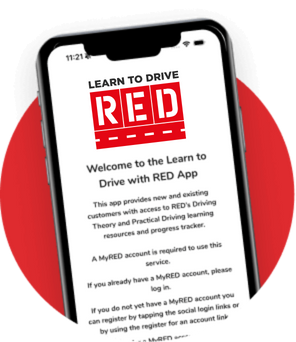
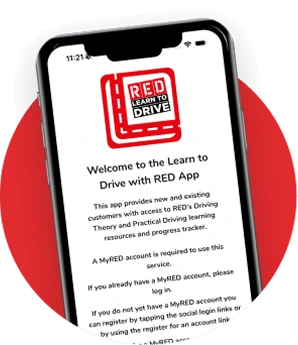
Keep your driving skills sharp with the Learn To Drive with RED app. Download the app, get a free 30-day trial plus access to practice theory test content

What is reverse parking?

Reverse parking is when you park your car in a space going backwards rather than driving forward. In the UK, there are two main types of reverse parking:

  • Reverse bay parking: this involves reversing into a marked bay, often found in car parks.
  • Reverse parallel parking: reversing into a space between two cars along the side of the road.

For the practical driving test, reverse parking could be one of the manoeuvres you are asked to complete. Reverse bay parking is the one most likely to be included, so this guide focuses on that technique.

How to reverse park?

When performing reverse bay parking, it’s important to stay calm, move slowly, and use good observation throughout the manoeuvre. Reversing into a parking space sounds difficult, but it is actually the preferred parking manoeuvre due to greater control and better positioning, making it easier to drive out safely afterwards.

Here is a step-by-step guide to performing a successful reverse park:

Choose your parking bay

Pick a suitable parking bay that is safe for you to park. Ideally, avoid spaces next to large vehicles that may block your view and spaces that are narrow between two vehicles. Make sure the bay is free of obstructions and gives you enough space on either side to open your doors.

Positioning your vehicle

Drive slowly past the bays, keeping roughly a car’s width between your vehicle and the row of spaces. This distance allows enough room to steer smoothly into the bay. When you have selected the bay which you want to park in, make sure this bay is clearly visible in your rear passenger window.

Start reversing into the bay

Select reverse gear so your reversing lights come on, signalling to other drivers that you are about to reverse. Before moving, check all mirrors and do a full blind spot check over both shoulders. Always give way to pedestrians, cyclists, and other vehicles.

Release the clutch gently (or brake if driving automatic) and reverse slowly, checking your mirrors and blind spots regularly. Begin steering towards the bay at the correct point, using your mirrors to monitor the bay lines.

As your car starts to enter the bay, gradually straighten the steering wheel. Continue reversing slowly until your vehicle is parallel with the lines and fully inside the bay. Don’t worry if you need to make small adjustments, you can always pull forward slightly and correct your angle.

Final checks

Once parked, check that your car is centred between the two white lines and not sticking out into the driving lane. Make sure you have left enough room on either side for passengers to open doors safely. Apply the handbrake and go into neutral gear or ‘Park’ in an automatic.

Reverse bay parking reference points

Using reverse bay parking reference points helps you position the car accurately. Key reference points include:

  • The bay line should appear in the rear side window just before you begin your full lock turn.
  • Keep checking your mirrors – when the bay lines appear parallel in your side mirrors, it’s usually time to straighten the wheels.
  • Use reference points depending on the car and driver’s seating position to help indicate when to start turning.

Practising these reference points makes reverse bay parking much easier and more consistent.

Find out more on bay parking

Reverse parking tips for the driving test

During your practical driving test, the examiner may ask you to demonstrate reverse bay parking as one of your manoeuvres. This is your chance to show that you can safely control the car, observe effectively, and finish neatly within a parking bay.

Many learners worry about this manoeuvre, but this is a preferred way of parking over forward bay parking and parallel parking. With practice and the right technique, this parking manoeuvre can be done with confidence.

Here are some essential tips to help you succeed:


Slow and steady

Control is more important than speed. Aim to keep the car moving at a slow walking pace while reversing. This gives you more time to check your surroundings, adjust your steering, and keep calm under pressure.

Check your mirrors and blind spots

Observation is critical, and examiners will be watching for effective mirror use and blind spot checks. Use your mirrors regularly to check your position between the bay lines and look over your shoulders to spot pedestrians, cyclists, or approaching vehicles.

Although you won’t usually need to indicate when reversing into a bay, be aware of other drivers in the car park. If signalling would help make your intentions clearer, use your indicators appropriately.

Reposition if needed

If your angle looks wrong or you drift too close to a line, don’t panic. It’s perfectly acceptable to stop, pull forward slightly, and adjust your position before continuing. Examiners prefer to see safe corrections rather than a rushed, inaccurate manoeuvre.

Your car must finish neatly inside the bay without touching or crossing the lines. Try to centre your vehicle so there is roughly equal space on either side. This shows good judgment and precision.

Practice makes perfect

In your driving test, you could be asked to reverse into a bay from either the left or the right, depending on where the examiner takes you. Make sure you practise both so you feel comfortable steering in either direction.

Learn To Drive With RED app

At RED, we want all students and drivers to feel confident and understand the road. The Learn To Drive With RED app is available to all students who want to learn all things driving theory, watch helpful videos and practice their knowledge. 

Download the app to keep learning and support on your driving journey. 

Download our app

FAQs

Is reverse bay parking on the practical driving test?

Yes. Reverse bay parking is one of the potential manoeuvres your examiner may ask you to complete during your practical driving test. Not every candidate will get this manoeuvre, as the examiner chooses at random, but you should be prepared. Practising reverse bay parking regularly will make sure you’re confident.

Will I fail if I need to adjust my position?

No, many learners worry that making adjustments will mean an automatic fail, but this isn’t true. If you realise you’re too close to a line or not properly aligned, you can stop, pull forward, and correct your angle before continuing. What matters most is that you manoeuvre safely, with good observation and control.

Is it easier to reverse park or drive forward?

For most drivers, reverse parking is actually easier and more practical than driving straight in. This is because reversing gives you more control over the position of your car, and it’s safer to drive out of the bay forwards when leaving.

Can I open the door to check my position?

No, you shouldn’t open your door during the test to check your position in the bay, as it could be unsafe and isn’t considered good driving practice. Instead, rely on your mirrors, observation, and the reference points you’ve been taught. If in doubt, you can always adjust your position by pulling forward and trying again.

You may also be interested in…

Learn To Drive With RED app

Find out more

The cornerstone of learning to drive efficiently is being able to monitor and track your progress to test success, and our new app, Learn To Drive With RED, puts learning to drive in the palm of your hand.

Find out more
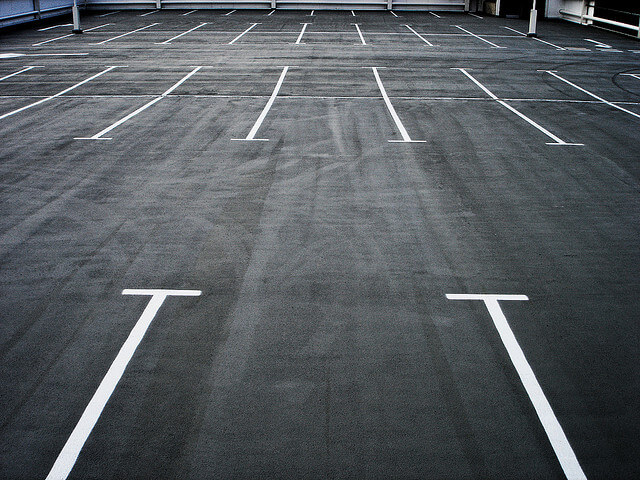
Parking lot

Bay Parking

Read more

Everything you need to know about the difference between forward and reverse bay parking, how to master each, the key reference points to help you, and what to expect on your driving test.

Read more
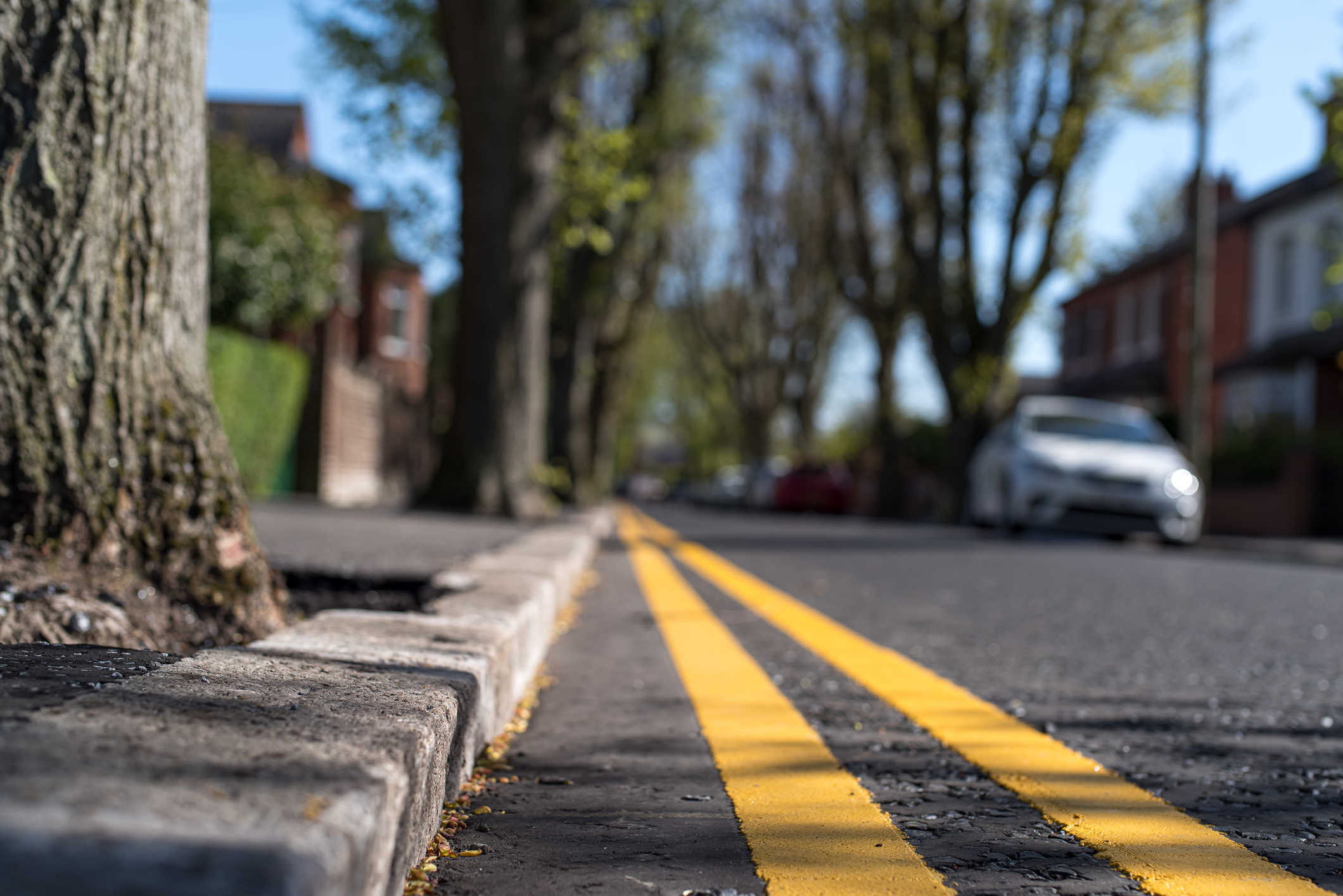
Close up of double yellow lines (meaning, no parking at any time) at the curb of a tree lined residential urban street, Belfast, Northern Ireland.

From tackling tight parking spaces to perfecting your angle on a hill, understanding the different types of parking and the correct techniques can make all the difference, especially when it comes to your driving test.

Learn more
Download the Learn to Drive with RED app
4.5800 ratings 4.5 out of 5 from 800 ratings