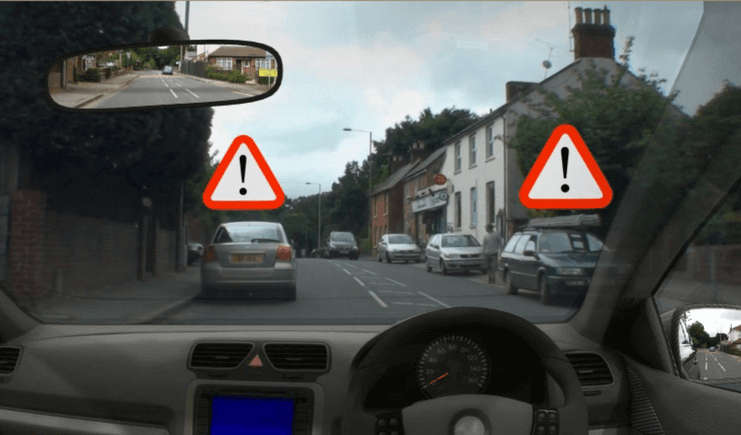
How to do an emergency stop successfully
Carrying out an emergency stop might sound daunting, but with the right technique, it becomes a controlled and confident manoeuvre. The key is to act quickly without panicking, applying the correct braking method while maintaining full control of the vehicle.
During your driving test emergency stop, the examiner isn’t looking for perfection; they want to see that you can react promptly, stop the car safely, and then move off again with proper observations.
Quick response
When the examiner signals (normally with a hand up, saying stop), release the accelerator instantly and apply firm and progressive pressure to the brake pedal. This reaction needs to be swift – any delay increases the stopping distance. This is the one time, when changing speed, that you DO NOT check your mirrors first.
Brake harder than usual
Press the brake pedal harder than usual, but avoid slamming or locking the wheels. You should feel your body lean forward slightly in the seat, which is a good indicator that you’ve braked with enough force for the car to come to a firm stop.
Secure the vehicle after stopping
When doing an emergency stop in a vehicle with a manual transmission, make sure you also press down on the clutch just before stopping, to avoid stalling the vehicle and reduce the risk of skidding. It is not a fail if you do stall; the most important thing in this scenario is that you stop immediately.
If you do stall, it is important to make sure you have control of the vehicle to avoid rolling back or forward. Apply the handbrake and put the vehicle in neutral.
Prepare to safely continue driving
Once you have stopped, apply the handbrake and select neutral. You must observe your surroundings to make sure everything is safe before moving again. Make sure you check mirrors and blind spots, signal to inform other road users and safely start driving again.

 0330 332 2680
  Book Online
  Login MyRed