 0330 332 2680
  Book Online
  Login MyRed
How to navigate a dual carriageway
Learn everything you need to know about driving on dual carriageways, including speed limits, signs, and top tips for staying safe and confident behind the wheel.
Download our app

Get a 30-day free trial of our app and start learning your theory today!



Get flexible learner driver insurance today.
Get a quoteLearn with RED. Practise with VeygoLearn everything you need to know about driving on dual carriageways, including speed limits, signs, and top tips for staying safe and confident behind the wheel.
Download our app
Keep your driving skills sharp with the Learn To Drive with RED app. Download the app, get a free 30-day trial plus access to practice theory test content.


A dual carriageway is a type of road you’ll come across all over the UK and abroad. You can recognise it as two directions of traffic separated by a barrier or ‘central reservation’ rather than just paint on the road: this is to help reduce the risk of head-on collisions. There can be any number of lanes on either side of the barrier, from one upwards.
These roads are designed to carry more traffic than a standard single carriageway and are often found near towns, cities, shopping centres, and airports, helping to reduce congestion and keep traffic moving smoothly.
The following speed limits apply to all single and dual carriageways with street lights, unless there are signs showing otherwise:
But, if the national speed limit signs are displayed, the speed limit on a dual carriageway is usually 70 mph for cars and motorcycles. But you should make sure to always check for speed limit signs, as the limit can be lower in some areas: for example, in urban, or more built up areas, or during roadworks. Remember, if you’re over the speed limit by a big margin – 3 to 5 mph or more – that could be a major fault in your driving test.
National speed limits on dual carriageways can also vary depending on the vehicle type and what country you’re driving in. For cars towing a trailer, or caravans, coaches and lorries, the speed limit is 60mph – and for lorries over 7.5 tonnes it’s 60mph in England and Wales, but 50mph in Scotland.

It’s easy to get confused between different types of roads, but knowing the difference is important for safe and legal driving. Here’s how to tell them apart:
| Road Type
|
Where you’ll find it
|
Number of lanes
|
Overtaking
|
Stopping
|
| Single carriageway
|
Towns, villages, countryside
|
One lane per direction of traffic. No barrier between the lanes
|
You can overtake, but need to be careful of oncoming traffic
|
You can stop if it’s safe and allowed
|
| Dual carriageway
|
Busy roads between towns/cities, near airports or shopping centres
|
Any number of lanes from one upward. But, there’s always a barrier between the opposite directions
|
You can overtake, but you need to use the right-hand lane
|
Only stop in an emergency, and on the hard-shoulder if there is one
|
| Motorway
|
Long distance routes between big cities
|
Typically two or more lanes of traffic. There’s a barrier between the opposite directions
|
You can overtake, if the road has 3 lanes you have to use the middle lane, or if there are 2 then the right lane. You then move back left.
|
Never stop, unless it’s an emergency. You’ll need to use the hard shoulder or a lay-by
|
Knowing how to drive safely on a dual carriageway is important for your own safety, as well as other road users around you. These roads very often have higher speed limits, and accidents can be more serious if something goes wrong. Dual carriageway driving may also come up during your practical driving test, so it’s important to be prepared.
‘Mirrors, signal, position, speed, look’ is a useful routine for making safe decisions when you’re driving. It’s especially helpful on the dual carriageway for planning ahead with higher speed traffic.
You can use MSPSL in the following situations, and the guide below will help you apply it:
By sticking to MSPSL, you’ll avoid last-minute decisions and stay one step ahead.
Joining and leaving a dual carriageway can feel a bit daunting at first, but it becomes second nature with practice.
When joining, your goal is to match the speed of traffic and merge in smoothly without causing other drivers to brake or change lanes. When leaving, it’s all about planning ahead so you don’t miss your exit or have to make last-minute decisions. Both situations rely on good observation, timing, and using routines like MSPSL to stay safe and confident.
A slip road is a short road designed to help you safely join or exit a dual carriageway without disrupting the flow of traffic.
When you’re joining, the slip road runs alongside the carriageway, giving you space to build up speed. You’ll spot it by the road layout – a separate lane merging into the left-hand lane – and signs with two white lines on either a green (for primary routes) or white (non-primary routes) background: the dual carriageway symbol.
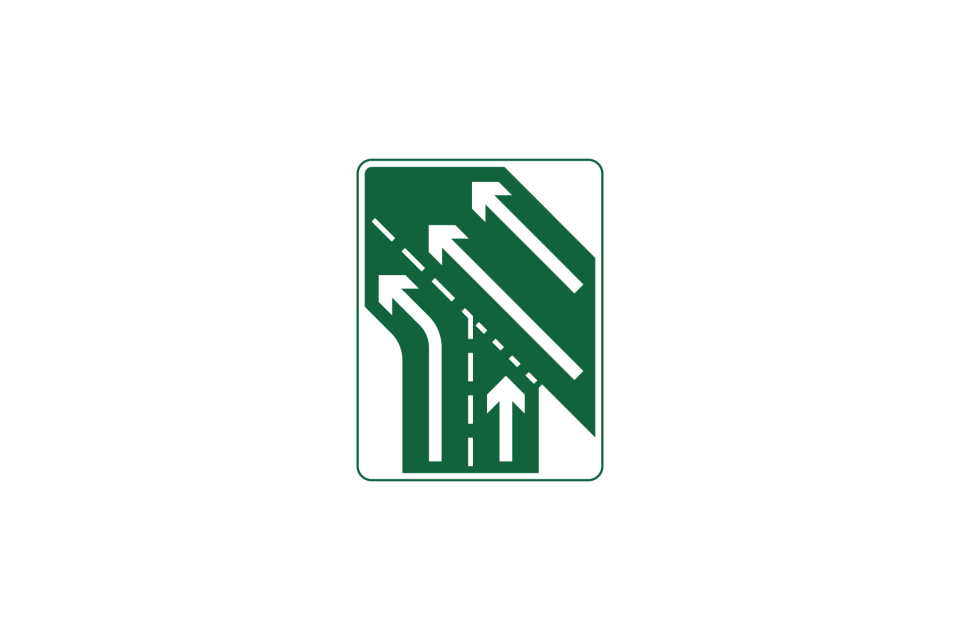

When you’re leaving, you’ll also use a slip road. This time to safely slow down and exit.
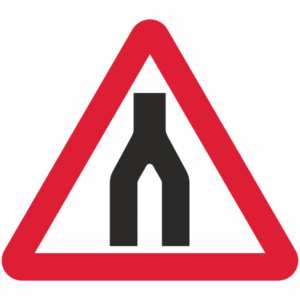
Whether you’re joining or leaving, slip roads are all about smooth transitions – plan ahead, signal clearly, and don’t panic if you miss your exit. There’s always another one coming up.
If you’re joining or leaving a dual carriageway using a right turn, things work a bit differently compared to using a slip road. These types of turns are more common on rural dual carriageways, and they often involve using a central reservation – the gap or space between the two sides of the road.
You’ll usually be waiting in a side road, needing to cross over the first carriageway to join the far side.
Turning right off a dual carriageway means you’ll be slowing down and crossing the path of oncoming traffic.
Joining or leaving this way can feel more intense than using a slip road, but with good observation and solid planning, you’ll be just fine. Practise with an instructor and take your time. Confidence comes with experience.
[Diagram of leaving with a right turn]
While you’re driving on the dual carriageway, there are lots of things to bear in mind to make sure you’re driving safely. Here are a few things to remember that will keep you confident while driving.
One of the most common causes of accidents is tailgating: following too closely behind another car.
To check you’re not too close to the car in front, you should use the two second rule: pick a landmark in the distance, and if the car in front of you reaches that landmark before you count two seconds, then you are too close. If it’s raining, you should double this rule to 4 seconds. And if it’s icy or snowing, increase it even more.
It’s important to leave enough space between you and the car in front – but don’t just stare at their bumper. Scan the road ahead for things like:
And don’t forget your mirrors too. Being aware of what’s behind is just as important as what’s ahead.
When you’re driving on high-speed roads like dual carriageways (and motorways!), lane discipline is super important. Most of the time, you should be in the left-hand lane.
The right-hand lane on dual carriageways is for overtaking and turning right, don’t cruise in it. If you do need to overtake, use MSPSL and make sure you’ve fully passed the vehicle before moving back into the left lane. You should avoid lingering in another vehicle’s blind spot for too long, especially large vehicles like lorries.
One more thing: other drivers might drift slightly in their lanes. You can’t control what they do, but you can stay sharp. Only switch lanes or overtake when you’re sure it’s safe.
Most dual carriageways are ‘clearways’, which means you’re not allowed to stop anywhere on the road unless it’s in a proper layby.
If there is an emergency – like an accident or your car breaking down – and you do have to stop, make sure you use the hard shoulder if there is one. You should try to pull over as far to the left as you can. Once you’ve stopped, get out of the car from the left side if you can. Stand as far away from the moving traffic as possible, standing towards the back of the car: this way, you’re always facing the oncoming traffic, so you’re more aware of the surroundings.
You should prepare for dual carriageways by getting familiar with all the rules and questions that could come up in your driving theory test. The Learn to Drive with RED app has practical driving and theory tips to help you get to grips with the questions that could be asked and helpful guidance for your test. You can also track your progress with the learner checklist to make sure you’ve covered all the other areas in your test.
Download the app to keep learning and support on your driving journey.

Dual carriageways can be a part of your practical driving test. But ultimately, it depends on where your test centre is and what your local roads are like. Some routes will include them, but if your test centre is local to you then your instructor will make sure you’ve had plenty of practice beforehand.
In most cases, bicycles can go on dual carriageways unless there’s a specific sign saying otherwise. But, because of the high speed limits, it’s not always a comfortable or safe choice. If you do see a cyclist while driving on the dual carriageway, make sure you reduce your speed slightly and pass them safely.
Yes, you must always signal when changing lanes, overtaking, or leaving the dual carriageway when other road users will benefit. Remember to signal in good time, cancel your indicator after the manoeuvre, and use MSPSL (‘Mirrors, signal, position, speed, look’) to stay in control.
The main difference is how traffic is separated – single carriageways have no physical divider, whereas a dual carriageway has a central reservation (like a barrier or a grass strip) separating the two directions.
Single carriageways are more common on rural roads, local roads, and B roads – they’re just ‘normal’ roads. Whereas dual carriageways are designed for faster travel, and can be found on bypasses, ring roads, or some A roads.
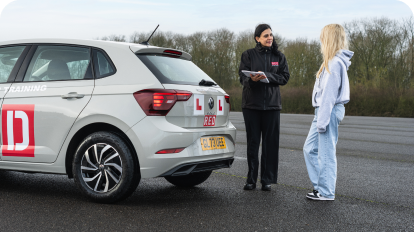
The cornerstone of learning to drive efficiently is being able to monitor and track your progress to test success, and our new app, Learn To Drive With RED, puts learning to drive in the palm of your hand.
Find out more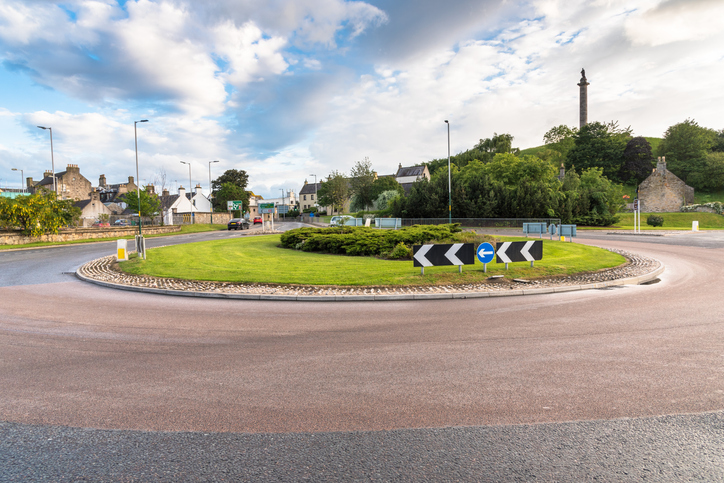
Learn how to navigate a roundabout with RED Driver Training. Discover roundabout signs, roundabout rules, signalling & right of way guidance.
Read more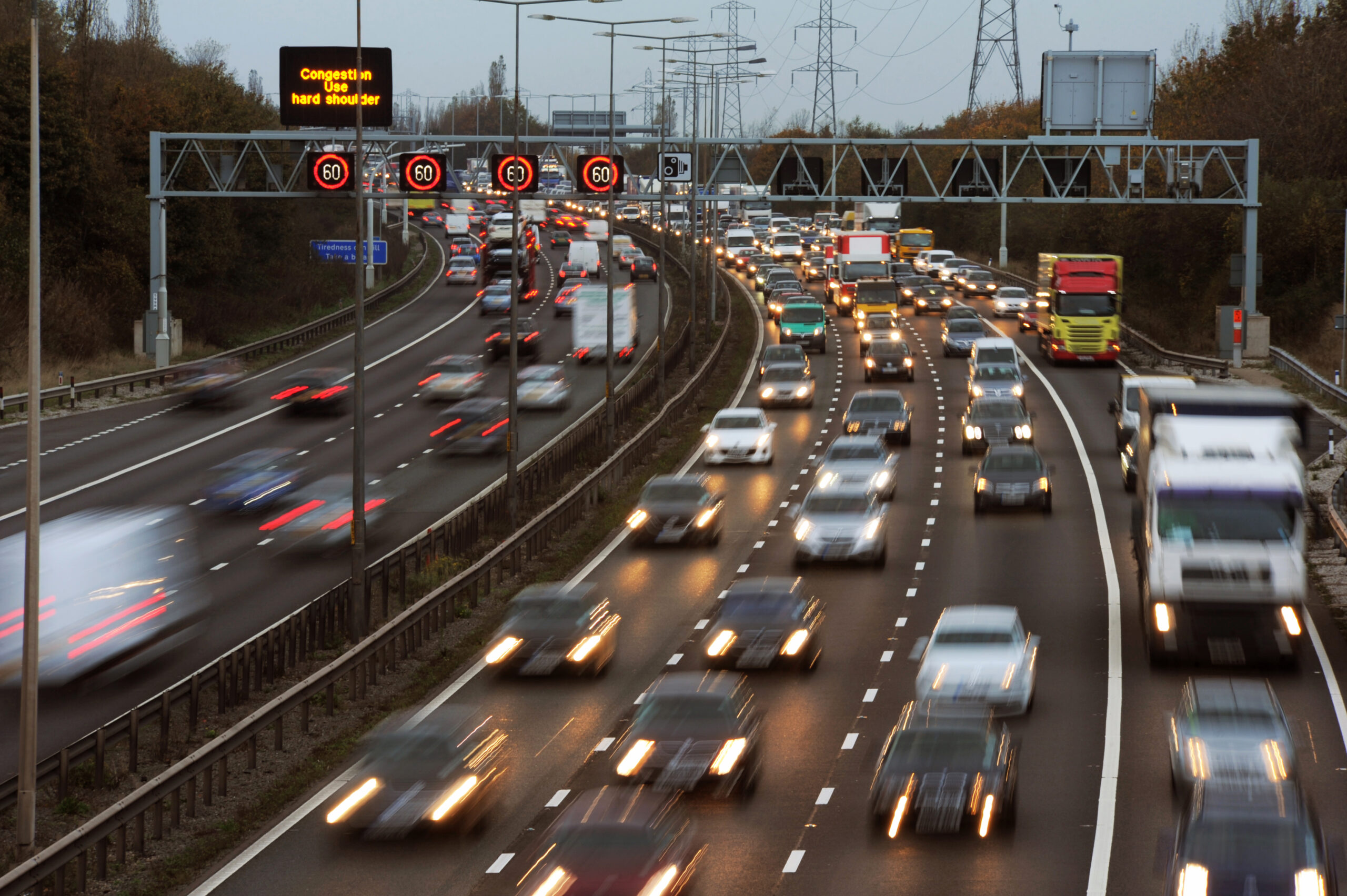
RED’s beginner's guide to motorways in the UK. This guide will explain how to use motorways safely, speed limits and signs, as well as additional rules to be aware of.
Learn more